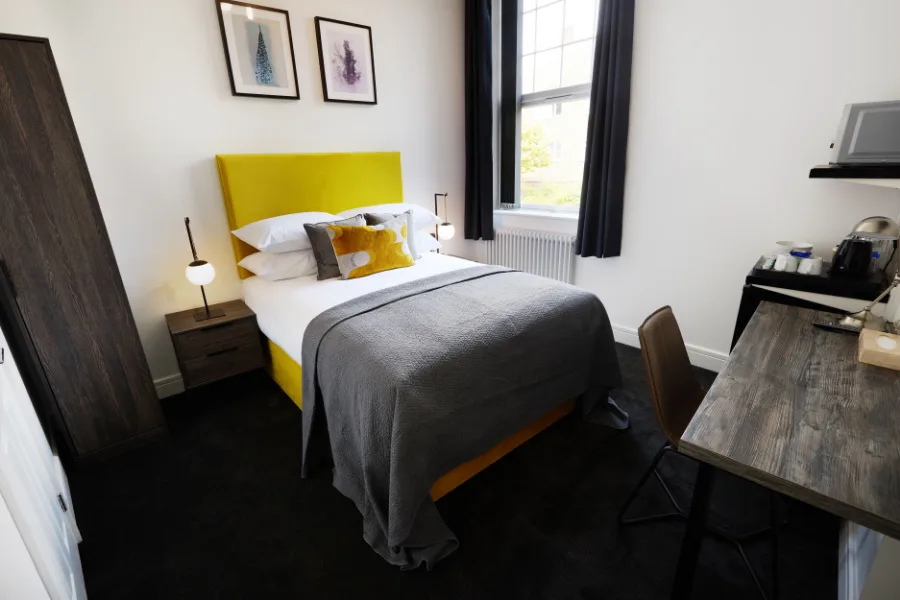
How to Start a Co-Living Business in Malaysia: Costs, Rules & Mistakes to Avoid
Thinking of starting a co-living business in Malaysia? Learn how to choose a business model, check permissions, budget startup costs and calculate break-even occupancy before committing. See how EasyRenz can help organise rent collection, tenancies and maintenance. The article includes contextual links to official guidance, EasyRenz and Roomz. Registration fees, renovation considerations, tax guidance and EasyRenz features were checked against their respective sources. ssm.com.my

Updated: 22 November 2026 · Focus: long-term residential room rentals, with Peninsular Malaysia examples
How do you start a co-living business in Malaysia? Choose a business model, validate tenant demand, confirm permission to use the property, check local requirements, calculate startup costs and break-even occupancy, then establish tenancy and operating procedures before accepting tenants. Business registration alone does not authorise every property, layout or accommodation use.
Rent a house, furnish the rooms and collect more rent than you pay the owner. That sounds straightforward—but it leaves out the decisions that determine whether a co-living business survives.
Vacant rooms, repair bills, unsuitable premises and unclear tenancy terms can quickly absorb the apparent margin. A better starting question is: Can this property operate lawfully and remain financially workable when some rooms are empty?
This guide explains the costs, practical steps and mistakes to avoid when starting a co-living business in Malaysia, including how to plan utility billing and tenant access. At the end, you will find a co-living business startup checklist you can use before signing a lease, spending on renovation or welcoming your first tenant.
1. Choose your co-living business model
For this guide, co-living means longer-term room rentals with shared facilities and organised services such as cleaning and maintenance. Short-stay accommodation and worker housing need separate assessment.
- Own and operate: rent out rooms in a property you own. Budget acquisition costs, financing and repairs alongside operations.
- Lease and sublet: lease a property and rent individual rooms with express written permission. Master rent remains payable even when rooms are empty.
- Operate for an owner: agree responsibilities and remuneration under a properly structured arrangement. Obtain advice on whether the services constitute regulated property management or estate agency practice.
The Board of Valuers, Appraisers, Estate Agents and Property Managers provides registration information. Do not assume that registering an ordinary business permits regulated professional services.
2. Validate demand before committing to a property
Identify who the rooms serve: students, young professionals or people relocating for work. Their priorities may differ in lease length, transport access, furnishings and shared-space expectations.
Review comparable rooms rather than copying the highest advertised rent. Compare bathroom access, room size, air conditioning, utilities, walking routes and building condition.
Use Roomz room rental listings to research locations near transport, campuses and malls. For example, compare room for rent Petaling Jaya listings when assessing that market. Asking prices are research inputs, not evidence of achieved rents or guaranteed demand.
Visit competing properties where possible. Check whether your proposed rent offers a clear reason to choose your room.
3. Check the legal position before paying for renovation
Business registration and local permissions are separate
Choose an appropriate entity and registration route. SSM lists annual business registration at RM30 under a personal name or RM60 under a trade name. EzBiz eligibility includes Malaysian citizenship or permanent residency and a minimum age of 18.
These are business-registration fees, not a complete co-living licence package. See the SSM EzBiz requirements and fees. Company incorporation, ongoing administration and registration arrangements outside this route require separate budgeting.
Give the relevant local authority the property address, proposed use, layout, occupancy and services. Ask whether planning permission, change-of-use approval, building approval or premises licensing applies. Do not assume that calling the operation “co-living” determines its legal category.
Secure clear owner permission
For lease-and-sublet arrangements, have the master tenancy reviewed before signing. Address room-by-room subletting, permitted use, alterations, repairs, access, insurance, reinstatement and termination.
Check whether the lease gives enough time to recover setup spending. An attractive monthly margin may still be a poor deal if the owner can end the arrangement before you recover your investment.
Owner consent does not replace council or building-management requirements.
Check renovation, strata and fire requirements
Do not assume partitions are acceptable simply because a contractor can install them. Confirm the approved layout and required permissions before adding bedrooms, changing plumbing or altering electrical installations.
CIDB’s renovation approval guidance explains approval requirements and the risks of unauthorised work. For strata properties, check written management approval and applicable by-laws alongside local-authority requirements.
Ask BOMBA or a qualified consultant about the proposed use, escape routes, electrical safety, protective equipment and any applicable fire certification. Requirements depend on the premises; do not assume every rented house requires the same certificate or safety layout.
If providing employer-arranged or centralised worker accommodation, investigate the separate Act 446 accommodation requirements. JTKSM states that the Act applies in Peninsular Malaysia and Labuan. Ordinary room rental should not automatically be equated with worker accommodation.
4. How much does it cost to start a co-living business?
There is no reliable nationwide startup price. Property condition, approved capacity, furnishings, deposits and local requirements can change the budget substantially.
The following is a hypothetical planning example: one leased property with six existing bedrooms whose use and occupancy have been confirmed as acceptable, at RM2,200 monthly master rent. It does not assume that creating six rooms is permitted in an ordinary house.
- Assumed two-month security deposit: RM4,400.
- Assumed first month’s rent in advance: RM2,200.
- Assumed utility deposit: RM1,100.
- Furniture and appliances allowance: RM12,000.
- Repairs and cosmetic preparation allowance: RM5,000.
- Safety equipment and installation allowance: RM1,500.
- Legal review, documentation and stamping allowance: RM1,200.
- Photography and launch marketing allowance: RM600.
- Trade-name business registration: RM60 for one year, if this route applies.
- Operating reserve: RM17,100, based on six months of the fixed costs below.
Illustrative funding subtotal: RM45,160. Add actual site-specific approval, consultant, licensing and other costs before treating this as a complete budget. Smart sub-meters, door locks, installation, gateways and any recurring technology charges are not separately priced in this example; add the quoted amounts if you choose them.
Except for the stated SSM fee, these figures are assumptions—not market quotations, prescribed deposit amounts or official fee schedules. Safety and documentation allowances may be insufficient for a particular property. Obtain itemised quotations.
Refundable deposits still tie up cash, even though they are different from spending on furniture or renovation. Tenant deposits should remain available for refunds rather than funding your fit-out.

5. Calculate break-even occupancy before signing the lease
Assume six rooms at RM700 each. Full-occupancy rent is RM4,200 a month.
Assume fixed monthly costs of RM2,850: RM2,200 master rent plus RM650 for internet, cleaning, common utilities, insurance, administration and a repair allowance. Allow another RM50 per occupied room per month for variable costs.
Break-even occupancy = fixed monthly costs ÷ [number of rooms × (rent per room − variable cost per occupied room)].
For this example: RM2,850 ÷ [6 × (RM700 − RM50)] = approximately 73.1% occupancy.
- 90% average occupancy: RM3,780 rent less RM2,850 fixed costs and RM270 variable costs leaves RM660.
- 80% average occupancy: RM3,360 less RM2,850 and RM240 leaves RM270.
- 70% average occupancy: RM2,940 less RM2,850 and RM210 produces a RM120 shortfall.
These percentages represent average occupied room-months over time. The results assume rent is collected in full and exclude income tax, startup-cost recovery, financing of setup costs and payment for the operator’s own time. They are budgeted operating cash surpluses, not net profit.
For a property you own, replace master rent with the relevant costs. Include full loan instalments when testing cash flow. The EasyRenz rental yield calculator can support property-income analysis, but a master-lease business also needs its own operating budget.
6. Set up agreements, payments and records
Have clear tenancy documents covering rent, deposits, utilities, shared facilities, repairs, access, notice and refunds. Keep an inventory and dated condition photos at check-in.
LHDN’s stamping guidance states that instruments executed in Malaysia must generally be stamped within 30 days. Get the applicable duty and deadlines checked for both the master tenancy and room agreements.
Keep rental receipts, supplier invoices, deposit records and bank transactions. LHDN’s Public Ruling on income from letting real property distinguishes business and non-business letting income. Tax treatment depends on the facts; do not assume every startup payment is immediately deductible. Check applicable tax, service-tax and invoicing obligations with your adviser.
7. Build an operating system before adding properties
Decide who handles viewings, check-ins, overdue payments, cleaning, repairs and emergencies. Give tenants clear contact channels and protect their personal information.
EasyRenz’s co-living management features include rental billing and reminders, tenancy records, digital agreements, e-signature and e-stamping workflows, deposit management, maintenance tracking and occupancy reporting. Plan utility billing and access management alongside these workflows, rather than treating them as last-minute installation decisions.
The purpose is to make unfinished work visible: unsigned agreements, unpaid bills, unresolved repairs and approaching vacancies. Software supports administration; it does not replace property approvals or sound financial decisions.
8. Plan room electricity billing with EasyRenz smart sub-meters
Who pays more when one tenant runs the air conditioner every night and another is rarely home? An equal split is simple, but it can create friction when usage differs. Decide how electricity will be measured and allocated before advertising the rooms.
The EasyRenz smart meter solution for rental properties supports remote readings, prepaid or postpaid arrangements, consumption records and billing integration. Tenants can view usage in the app and top up or pay through the integrated payment gateway, depending on the setup.
For a co-living operator, a suitable room-level sub-meter setup can help distinguish measured room consumption from common-area costs. However, what a meter records depends on the circuits connected to it. A meter serving only an air-conditioning circuit does not measure every appliance in that bedroom.
- Define what is metered: whole-room electricity, air conditioning only or another clearly identified circuit.
- Explain shared costs: state how the refrigerator, washing machine, corridor lighting and other common consumption will be handled.
- Disclose the charging method: explain the applicable rate, billing cycle, opening reading and any prepaid balance or refund process in the agreement.
- Keep an audit trail: record meter-to-room assignments and check opening and closing readings during tenant changes.
Ask a competent electrical installer to assess the wiring, installation permissions and meter suitability. Confirm the proposed charging arrangement against applicable supplier and regulatory requirements. A sub-meter does not automatically create a separate utility-provider account for each tenant.
Request an itemised quotation covering hardware, installation, connectivity, integration and recurring charges. Compare the cost with the manual reading and billing work it may reduce; do not assume the equipment will pay for itself through higher utility charges.
9. Organise tenant access with EasyRenz smart door locks
Every tenant change creates access work: handing over keys, tracking spare copies and arranging entry for cleaners or contractors. The EasyRenz smart door lock solution offers fingerprint, app and passcode access, with access logs and time-limited passcodes. Confirm the supported functions for your chosen model and connectivity arrangement.
EasyRenz also explains how linking a smart lock to a rental unit supports e-key handling at tenant check-in and check-out. This can reduce repeated manual handovers when the tenancy and device setup are maintained correctly.
- Before move-in: assign access to the correct room and permitted shared entrances, then test it with the tenant.
- For authorised visits: use suitable temporary access for a cleaner or contractor, with the necessary tenant notice and consent arrangements.
- At lawful handover: review and remove former occupants’ credentials, including shared or temporary codes.
- For daily reliability: assign responsibility for battery checks, emergency access and support if a device or connection fails.
Check door thickness, latch compatibility, installation approval and escape requirements before ordering. Include installation, any required gateway, batteries and ongoing support in the budget.
Give tenants clear information about access records and limit staff access to those who need it. Smart locks should support an agreed access process; overdue rent or a dispute should be handled through the appropriate tenancy and legal procedures, rather than treating remote access control as an eviction process.
Before accepting tenants, use the startup checklist below to check that utility billing, access settings and emergency arrangements are ready together.

What should new co-living operators avoid?
- Unauthorised subletting: confirm written permission and the relevant property requirements.
- Over-partitioning: do not trade safe, acceptable accommodation for a larger advertised room count.
- Budgeting at 100% occupancy: include vacancy, collection delays and repairs.
- Treating deposits as profit: track refund obligations separately.
- Unclear utility charges: explain the billing method and what each sub-meter measures before tenants commit.
- Installing devices without a process: test meter assignments, tenant access, battery checks and emergency arrangements before move-in.
- Underpricing your time: viewings, disputes and maintenance coordination require work.
- Expanding too quickly: confirm several months of stable operations and adequate reserves first.
Frequently asked questions
Is a co-living business legal in Malaysia?
It can operate lawfully when the actual use, agreements, layout and applicable approvals comply. The name “co-living” alone does not establish legality.
Do I need a co-living licence?
Confirm the requirements with the relevant council for the specific premises and model. An SSM certificate is not a substitute for any required property or operating approval.
Can I start without buying a house?
A properly authorised lease-and-sublet model can avoid buying the property, but still requires deposits, setup money, permissions and an operating reserve.
How much money do I need?
Use a property-specific budget. This guide’s RM45,160 subtotal is an illustration with stated exclusions, not a minimum capital requirement or a guaranteed launch price.
What occupancy rate should I target?
Calculate your own break-even point and aim for a comfortable margin above it. This example breaks even near 73.1%; a property with different rents or costs will differ.
Do I need smart sub-meters and smart locks to start?
Assess them against your property, approved installation options, budget and workload. They can support utility billing and access administration, but a small operation still needs clear procedures whether it uses connected devices or manual processes.
Where can I find a co-living business startup checklist?
The checklist at the end of this guide covers demand, permissions, startup funding, occupancy, tenancy documents, electricity billing, smart lock access and launch preparation. Save or print it and record the evidence behind each completed item.
Start with one property that works on paper and in practice
Validate demand, confirm permissions, obtain quotations and stress-test the numbers before committing. Keep reserves available and give every recurring task an owner.
When you are ready to organise room rentals, book an EasyRenz demo to see how tenancy, collection and maintenance workflows can support your operation.
Co-Living Business Startup Checklist: Before You Launch
Save or print this checklist before committing to your first property. Mark an item complete only when you have the supporting confirmation, quotation, document or tested process. Where a requirement does not apply, record why.
A. Before signing the lease or committing to the property
- ☐ Choose the operating model and define your target tenants.
- ☐ Compare similar rooms, visit the area and support your proposed rent with local research.
- ☐ Confirm the proposed use, layout and occupancy with the relevant local authority.
- ☐ Obtain express written owner permission for room subletting and proposed alterations, where relevant.
- ☐ Check strata by-laws, management approval, renovation permissions and fire requirements.
- ☐ Review the master tenancy, including termination, repairs, reinstatement and the time available to recover setup costs.
- ☐ Confirm the business-registration route and whether regulated services or worker-accommodation rules apply.
B. Before spending on setup
- ☐ Obtain itemised quotations for repairs, furnishings, approvals, documentation and installations.
- ☐ Add smart meter and smart lock hardware, installation, connectivity and recurring fees where selected.
- ☐ Separate refundable deposits from expenses and keep tenant refund obligations funded.
- ☐ Calculate monthly fixed costs, variable costs and break-even occupancy.
- ☐ Stress-test vacancy, rent collection delays and repairs; include operator time and startup-cost recovery in your investment assessment.
- ☐ Set aside an operating reserve based on your costs and vacancy risk.
C. Before the first tenant moves in
- ☐ Prepare tenancy terms, an inventory, dated condition photos and the required signing and stamping workflow.
- ☐ Explain rent, deposits, utility rates, common-area charges, notice and refunds before signing.
- ☐ Confirm what each sub-meter measures, test the room assignment and record the opening reading.
- ☐ Test billing or top-up arrangements and explain how tenants can query a charge.
- ☐ Test smart lock access for the correct bedroom and permitted shared entrances.
- ☐ Document battery checks, emergency entry and the lawful check-out access-removal process.
- ☐ Complete safety checks and give tenants emergency contacts and house rules.
- ☐ Assign responsibility for rent follow-up, cleaning, maintenance and personal-data access.
D. Before advertising and expanding
- ☐ Take accurate photos and publish clear listings with the full rent and utility terms.
- ☐ Set up tenancy, collection, deposit, expense and maintenance records.
- ☐ Review occupancy, arrears, repairs and actual cash flow monthly before adding another property.
Need help connecting the operating tasks? Book an EasyRenz demo to discuss rental management, smart sub-meter billing and smart door lock access for your proposed property.
Sources reviewed on 22 November 2026. Legal requirements vary by jurisdiction, property and operating model. Figures labelled as assumptions are illustrative. Obtain property-specific confirmation and professional advice before committing to a lease, renovation or regulated service.
Ready To Simplify Property Management?
Manage properties, collect rent and track maintenance from one platform built for landlords, property managers and rental operators.