
Student Housing Management: What Operators Near Malaysian Campuses Need To Know
Student housing runs on an academic calendar, not a rental one. Intake cycles, guarantors, shorter tenancies and the turnover that comes with all three.
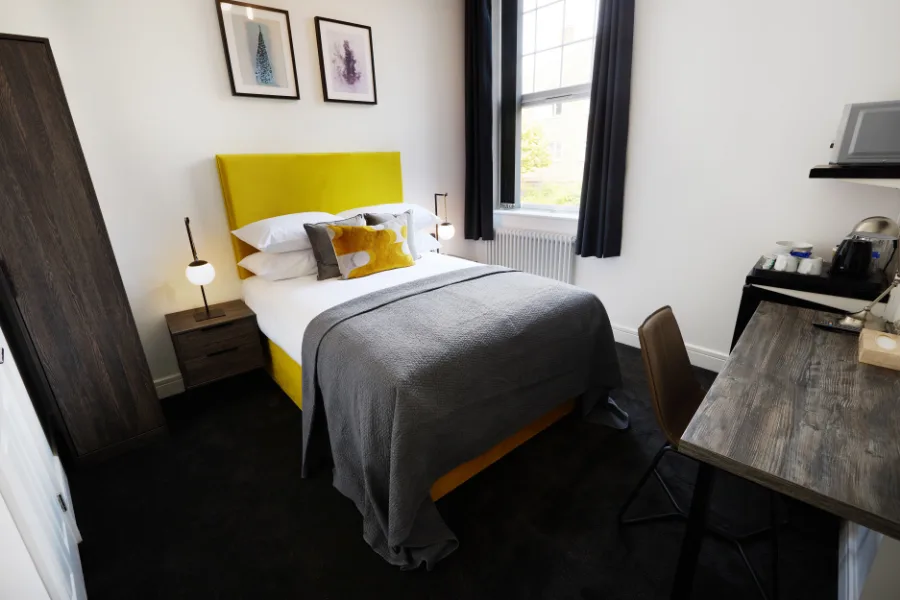
Student housing runs on an academic calendar, not a rental one. Demand arrives in concentrated intakes, tenancies are shorter than the market standard, and the entire portfolio turns over within a few weeks each year.
Everything operationally distinctive about student accommodation follows from those three facts.
The Calendar Sets The Business
A conventional rental portfolio has turnover spread through the year. Student housing concentrates it into short windows around intake, and that concentration cuts both ways.
The advantage: demand is predictable and intense. You know months ahead when enquiries will spike.
The risk: a room not let during the intake window is often not let at all that term. Students arrive, secure accommodation within days, and the demand disappears until the next intake. Missing the window can mean an empty room for an entire semester rather than a few weeks.
Everything else — marketing timing, viewing capacity, turnaround scheduling, staffing — is dictated by that asymmetry.
Know Your Campus Precisely
Student accommodation is a hyper-local business. Demand attaches to a specific institution, and sometimes to a specific faculty.
Establish, for every campus you serve:
- Semester start and end dates, and whether there are multiple intakes
- Total enrolment, and how much is non-local
- On-campus accommodation capacity, and who is guaranteed a place
- Whether first-years are required to live on campus
- Transport routes and realistic walking distance
- Any pattern in international student arrivals
That third and fourth point matter most. A campus expanding its own hostel capacity can remove a large slice of private demand in a single year, and operators who were not watching find out during the intake they had already budgeted for.
Tenancy Terms That Match The Term
A twelve-month tenancy does not fit a student who is on campus for eight or nine months. Insisting on one produces either empty promises or early terminations.
Common approaches:
- Academic-year tenancies aligned to the semester calendar, priced to recover the annual figure over fewer months
- Twelve-month tenancies at a lower monthly rate, giving continuity in exchange for the discount
- Semester tenancies, highest turnover and highest rate, suited to exchange and short programmes
Whichever you choose, price it against the annual income the room produces rather than against the monthly rent of a standard tenancy. A room let for nine months at the same monthly rate as a year-round unit earns 25% less over the year.
Guarantors And Payment Structure
Most students have no independent income, which changes how the tenancy is secured. Common practice includes a parent or guardian as guarantor, or payment of a term in advance.
Whichever route:
- Have the guarantor sign the agreement, not merely be named in it
- Verify the guarantor's identity and contact details independently
- Send arrears notices to the student and the guarantor together
- Be explicit about what the guarantor is liable for and for how long
For international students, a guarantor abroad is often impractical to pursue. Advance payment covering a term, or a larger deposit, is the more workable protection — and it should be agreed before arrival, not negotiated at the door.
Turnaround Is The Operational Test
When most of a portfolio empties in the same fortnight and refills in the next, turnaround capacity is the binding constraint.
What separates operators who manage it:
- Book contractors months ahead. Every operator near the same campus needs cleaners and painters in the same two weeks.
- Stagger move-out dates deliberately across the window rather than setting one date for everyone.
- Inspect on move-out, immediately, with the student present where possible. Deposit disputes are far harder to resolve once a student has left the country.
- Hold consumable stock. Mattress protectors, bulbs, keys, common breakages — buying these during the rush is slow and expensive.
- Photograph everything, both directions, every room.
The operators who struggle are not the ones with worse properties. They are the ones who begin arranging turnaround when the students leave.
Market Where Students Actually Look
Student housing search behaviour is distinctive: it is heavily social, heavily peer-referred, and compressed into a short decision period.
- Returning residents and their friends are the cheapest source of demand — ask every leaver whether they know someone coming
- Campus-adjacent social groups and forums carry most of the discovery
- Listings need photographs of the actual room, not a staged equivalent
- State the walking time to campus, because that is the first filter applied
- Be reachable and quick to reply — a student who does not hear back within a day has booked elsewhere
Response speed matters more here than in any other rental segment, because the decision window is days.
Managing A Younger, Shared Household
Many student residents are living independently for the first time. That is not a problem to be managed cynically, but it does shape the operation.
- Set house rules explicitly and go through them at move-in rather than emailing a document
- Expect more questions, particularly in the first month
- Anticipate noise and guest issues around exam periods and semester breaks
- Maintain a clear escalation path, including to the guarantor
- Keep an emergency contact for every resident, and for international students their local contact
Operators who invest slightly more attention in the first month typically spend far less across the remaining eight.
What To Track
The measures that actually run a student portfolio:
- Occupancy at intake, which effectively determines the year
- Percentage pre-let before the window opens — the best predictor of a comfortable intake
- Returning resident rate, the cheapest occupancy you will ever get
- Average turnaround days during the changeover
- Enquiry response time during the intake window
The second is the one worth managing hardest. A portfolio substantially pre-let before students arrive is a calm operation with room to solve problems. One that is largely empty when the window opens spends the whole intake reacting, and usually enters the semester with rooms it will not fill until the next one.
Ready To Simplify Property Management?
Manage properties, collect rent and track maintenance from one platform built for landlords, property managers and rental operators.