Budget 2027 Malaysia: What Rental Management Businesses Should Prepare for in 2027
What does Budget 2027 mean for rental management businesses in Malaysia? Explore the relevant wage and tax announcements, uncover the hidden costs of manual management, and learn how organised billing, collection tracking and reporting can help your business prepare for growth in 2027.
More units under management can look like business growth. But if every new tenancy brings more invoices to prepare, payments to check, messages to answer and reports to compile, your workload may grow faster than your profit.
For landlords, co-living operators and rental management companies, Budget 2027 Malaysia is a useful point to review how the business operates. Wage announcements and proposed tax measures deserve attention, alongside a practical question: can your current team handle a larger portfolio efficiently?
This guide explains the relevant announcements and the operational changes rental businesses can start making before 2027.
Updated on 12 October 2026. Budget announcements and tax proposals are summarised below; confirm applicable eligibility, implementation rules and effective dates before making payroll or tax decisions.
What does Budget 2027 mean for rental management businesses?

The impact depends on your business structure, workforce and expenditure. Three areas are particularly relevant when planning next year.
1. Review wage exposure and staffing plans
The Budget 2027 speech announces an increase in the minimum wage from RM1,700 to RM2,000 from June 2027, with an exemption for MSMEs whose annual sales are below RM50 million.
It would therefore be misleading to assume that every small rental management company must immediately increase its minimum wage to RM2,000. Check whether your business falls within the exemption and the eventual implementation rules.
For planning purposes, review your payroll commitments, hiring needs and supplier quotations. Identify which administrative tasks are consuming staff time before deciding that a larger portfolio requires another hire.
2. Check whether your company qualifies for the proposed tax reduction
The official Budget 2027 tax measures propose reducing the eligible MSME income tax rates to 14% on the first RM150,000 of chargeable income and 16% on RM150,001 to RM600,000, from the year of assessment 2027.
These preferential rates concern eligible companies and LLPs, subject to conditions including capital and annual sales limits. They should not be applied automatically to a landlord’s personal rental income or a sole proprietor’s business income.
Ask your accountant how the proposal applies to your entity. Keep management fee income, business expenditure and rental funds collected for owners clearly identifiable.

3. Evaluate technology spending on its business value
Budget 2027 also proposes extending accelerated capital allowances for qualifying expenditure, including ICT equipment and specified software expenditure, through 31 December 2030.
Eligibility depends on the expenditure and applicable rules. A recurring software subscription should not automatically be treated as qualifying capital expenditure.
When assessing rental management software, start with the work it can improve: billing, collection tracking, tenant records and reporting. Any available tax treatment is an additional consideration.
Why more managed units do not automatically mean more profit
Imagine a team managing 100 units that takes on another 50. The additional management fees look attractive, but those units also bring new tenant records, billing cycles, payment queries, maintenance requests and owner updates.
If the process relies on separate spreadsheets and individual WhatsApp conversations, staff may spend more time locating information than resolving the actual issue.
For a management company collecting rent on behalf of owners, total rent collected is also different from the company’s own management fee income. A larger collection figure alone does not show whether the management business has become more profitable.
Review the income earned from each contract alongside the time and cost of serving it. A useful starting point is administrative hours per managed unit, measured consistently from month to month.
Where manual rental management creates hidden costs
Checking the same payment information repeatedly
A tenant sends a transfer screenshot. One staff member checks the bank account, another updates the spreadsheet, and someone else confirms the payment to the owner. If those records do not agree, the team repeats the checks.
The goal is a clear payment status that staff can rely on, with a process for investigating missing references, partial payments and discrepancies.
Following up on arrears without a consistent process
When payment reminders depend on whoever remembers to send them, some accounts receive several messages while others receive none. Staff may also follow up with a tenant whose payment has already been recorded elsewhere.
Use a defined reminder schedule and an up-to-date outstanding balance. Keep a route for staff to handle disputed charges, payment arrangements and other exceptions.
Rebuilding owner reports every month
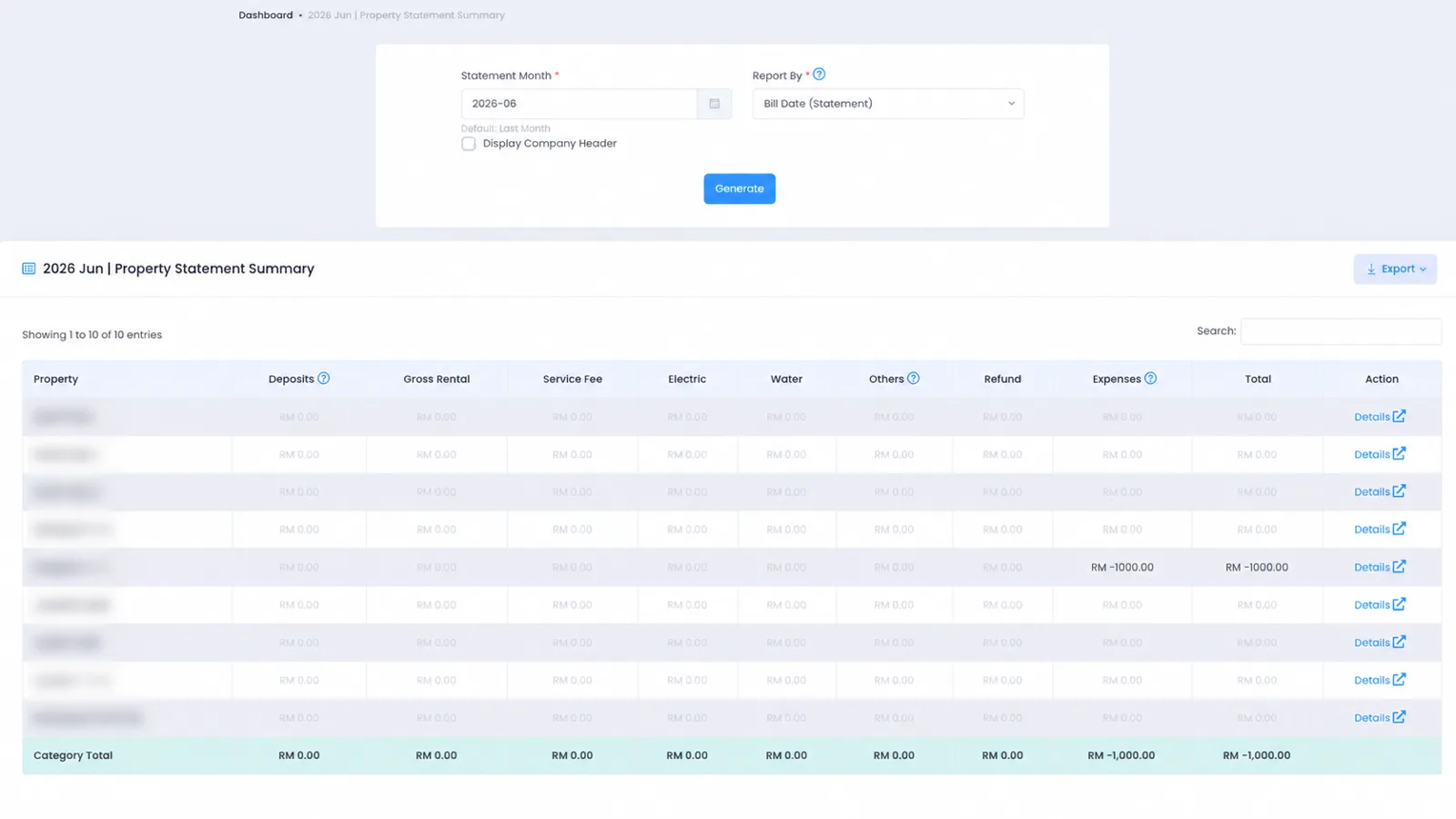
Compiling rent, expenses and maintenance updates from different files takes time. Corrections become harder when staff cannot trace a figure back to its underlying record.
Consistent records throughout the month make the reporting process easier to review. They also help the team explain what was billed, what was collected and what remains outstanding.
Searching conversations for maintenance updates
A repair can involve the tenant, owner, staff member and contractor. When the details sit across several chats, it becomes difficult to establish who approved the work and whether it has been completed.
Give each request a responsible person and a clear status. Record the problem, approvals, work undertaken and supporting costs in an organised process.

What does administrative time actually cost your business?
Small tasks become significant when repeated across a portfolio.
For illustration, if a recurring task takes 10 minutes per unit each month across 500 units, it consumes 5,000 minutes, or approximately 83 hours every month.
This is a hypothetical example, not an EasyRenz performance claim. Measure your own billing, payment-checking and reporting time to identify where improvements would have the greatest value.
When comparing software options, include subscription costs, setup work, staff training and any relevant transaction or integration charges. Compare that total with the time saved and the operational problems addressed.
Automation can reduce repetitive work. Staff still need to review exceptions, resolve tenant concerns and maintain accurate records.
Five changes to make before expanding your rental portfolio
1. Standardise tenant and tenancy records
Use consistent fields for the unit, tenant, rental amount, deposits, tenancy dates and payment arrangements. Decide who can update the records and how changes are checked.
2. Establish one billing and collection process
Set billing dates, payment references, reminder schedules and responsibilities. Make sure staff understand how to handle partial payments, adjustments and overdue accounts.
3. Make maintenance responsibilities visible
Define who receives requests, seeks approval, arranges contractors and confirms completion. A shared process helps prevent work from being lost during handovers.
4. Agree on a consistent reporting format
Decide what owners need to see and how often. Use the same definitions for rent billed, rent collected, outstanding amounts and expenses so reports remain comparable.
5. Test the process on a manageable group of units
Start with a small portfolio, check the opening records and run a complete billing cycle. Review discrepancies and train staff before extending the process to more units.
How EasyRenz supports a more organised rental operation
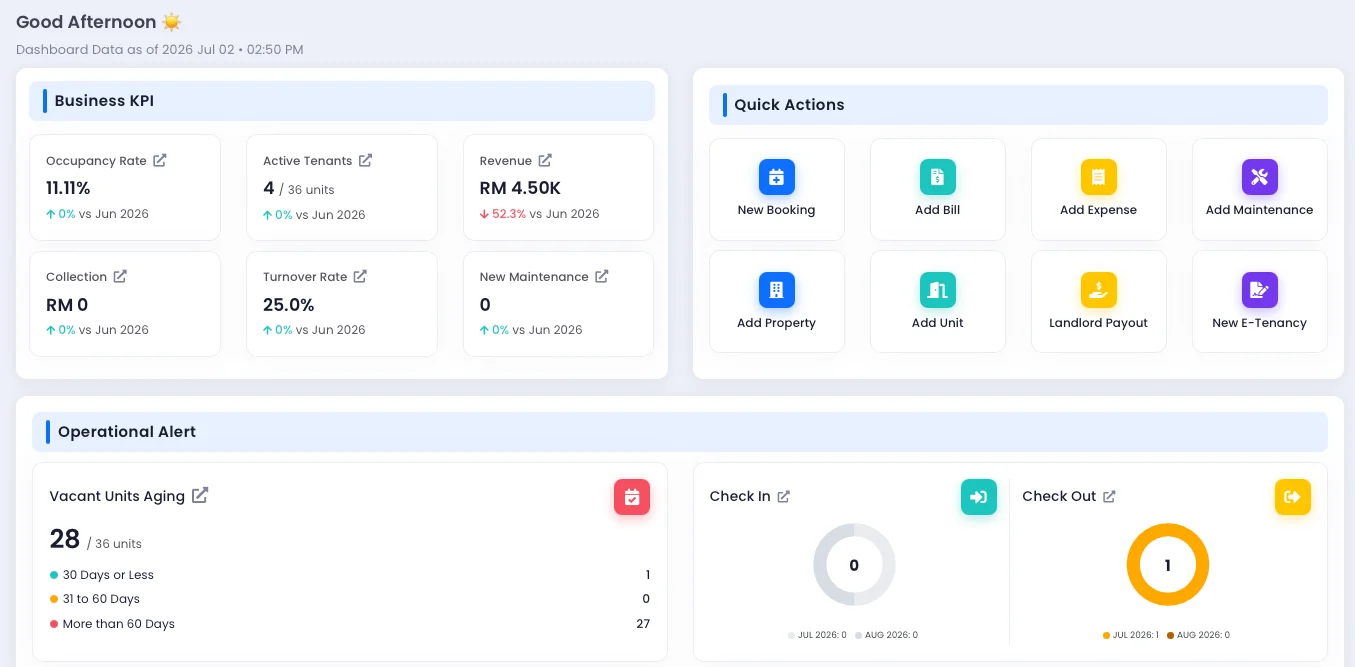
EasyRenz property management software in Malaysia brings tenant management, rental collection, maintenance tracking and property reporting into one platform.
Its published rental management software features include automated billing, payment reminders and collection tracking. These functions can support a consistent monthly process as your portfolio grows.
Tenant profiles and lease records help staff keep tenancy information organised. Maintenance request tracking provides a way to monitor issues and their progress, while income, expense and occupancy reports support regular portfolio reviews.
The practical value depends on how your team uses the system. Accurate opening data, clear responsibilities and staff training are essential parts of implementation.
During a demo, use your own operational questions: how will the team check outstanding rent, handle a tenant change, follow a repair and review monthly reports? Evaluating those workflows makes the discussion relevant to your business.
What should you monitor after improving your management process?
Record a baseline before making changes, then review the same measures after implementation:
- Administrative time: Hours spent on billing, payment checking and reporting.
- Collection status: Rent billed, rent collected and overdue balances.
- Maintenance progress: Open requests, completion time and repeated issues.
- Reporting effort: Time needed to prepare reports and resolve corrections.
- Portfolio capacity: Units managed per staff member, considered alongside service quality.
These measures help you assess whether the process is improving. Use them to guide staffing and expansion decisions rather than relying only on the number of units under management.
Frequently asked questions
Does the RM2,000 minimum wage announcement apply to every rental management company?
No. The Budget speech includes an exemption for MSMEs with annual sales below RM50 million. Confirm your business’s position under the implementation rules before changing payroll assumptions.
Will software automatically make a rental business more profitable?
No. Software can help organise records and reduce repetitive tasks, but results depend on pricing, costs, occupancy, service quality and implementation. Evaluate the improvements against your own baseline.
Should a small rental operator wait until it manages more units?
If billing, payment checking or reporting already takes substantial time, review the process now. Starting with a manageable portfolio gives staff time to learn and correct issues before expansion.
Prepare your rental business for 2027 with a clearer operating process
Budget 2027 gives rental operators a reason to review costs and business planning. The next step is to examine whether everyday operations can support the growth you want.
If adding units also means adding more spreadsheets, manual checks and repeated follow-ups, start by improving those workflows. A consistent process can give your team more capacity to manage tenants, support owners and maintain service quality.
See how EasyRenz fits your rental operation. Book an EasyRenz property management software demo to explore rental collection, tenant management, maintenance tracking and reporting around your business requirements.
Ready To Simplify Property Management?
Manage properties, collect rent and track maintenance from one platform built for landlords, property managers and rental operators.