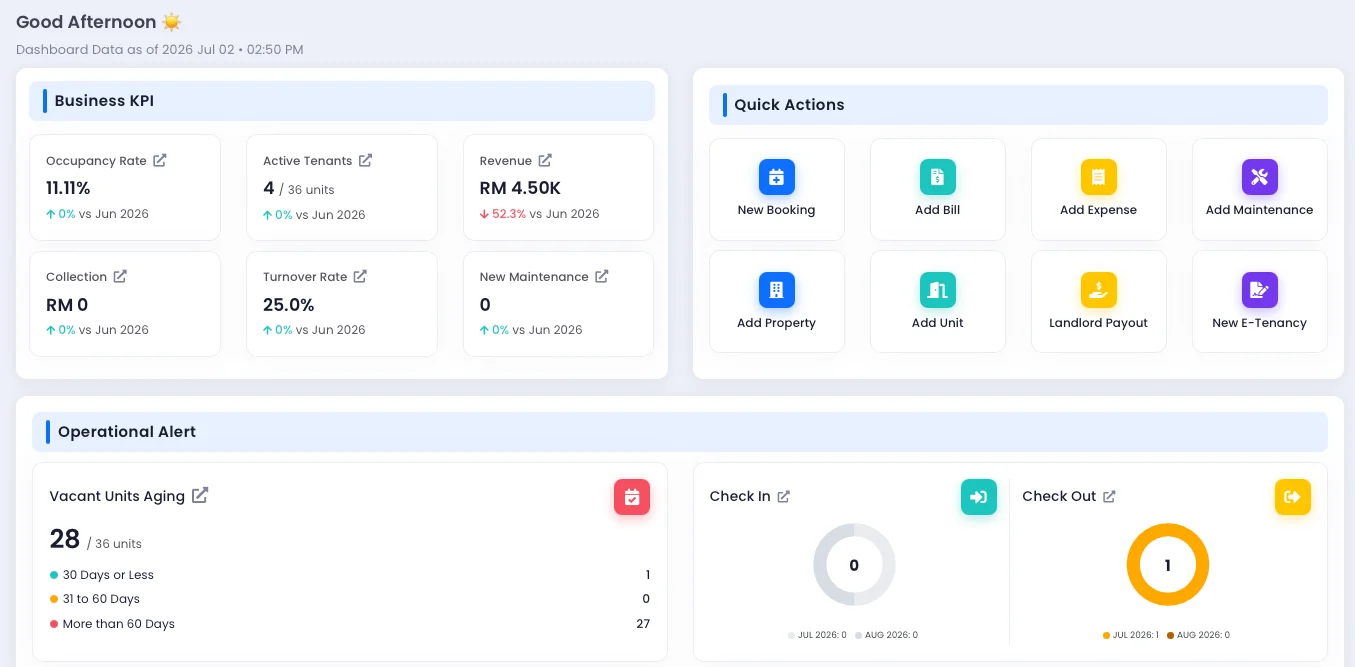
Manual vs Automated Property Management: What It Really Costs You
Spreadsheets look free. Counting the hours, the missed collections and the errors they cost gives a very different number.
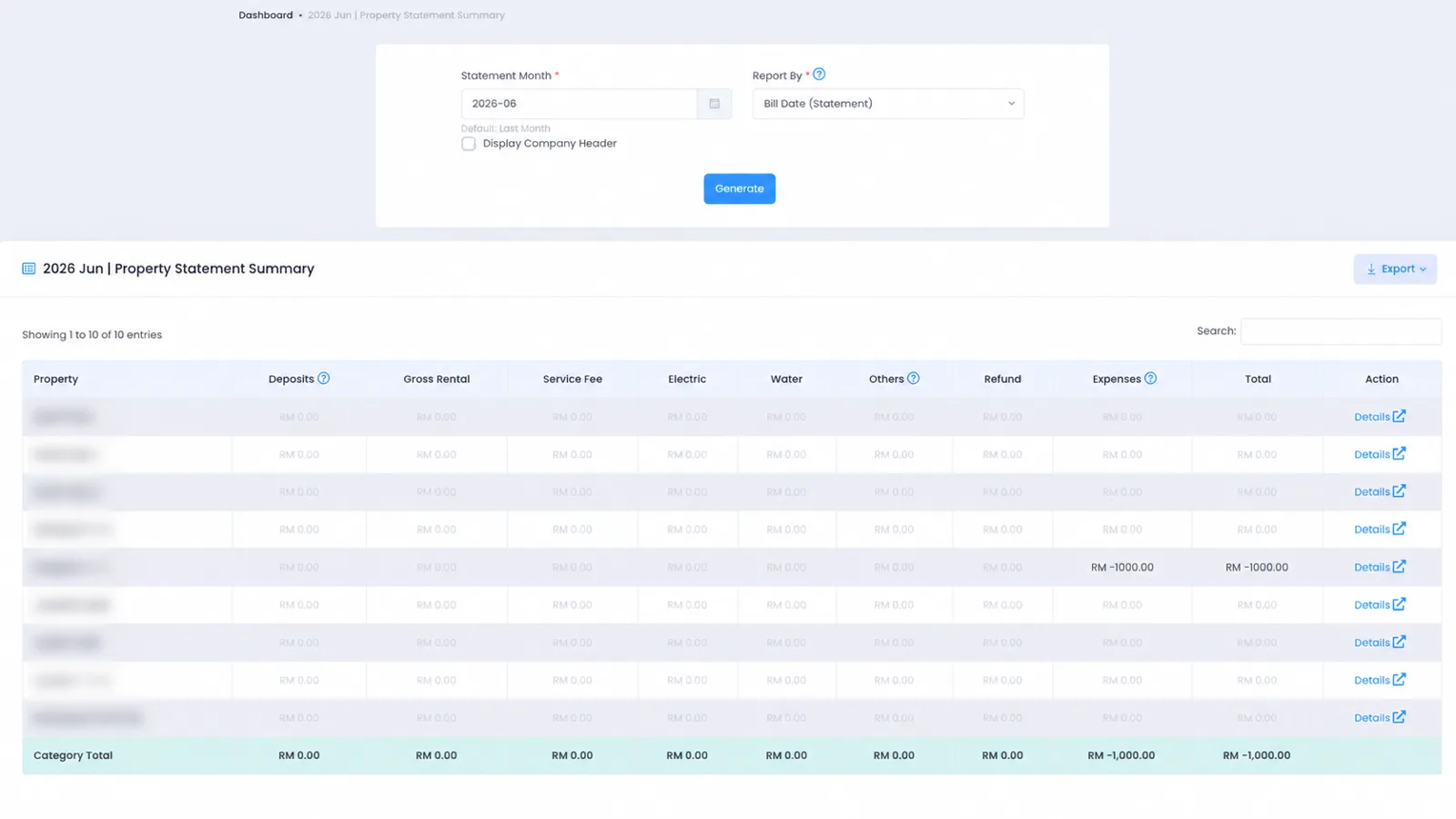
Spreadsheets are free, which is why the comparison usually stops there. But a spreadsheet has running costs — they are just paid in hours, missed collections and errors rather than in a monthly invoice.
This article puts a number on both sides so the comparison is an actual comparison.
The Real Cost Of Manual Management
Manual management costs are real but unbilled, which is what makes them easy to ignore. They fall into four categories:
- Time. Reconciling payments, chasing arrears, coordinating repairs, preparing reports.
- Leakage. Recoverable costs never invoiced, arrears found late, renewals missed.
- Error. Wrong figures, misallocated payments, deposits returned incorrectly.
- Opportunity. The portfolio you did not grow because administration consumed the capacity.
Only the first is obvious, and it is usually the smallest.
Counting The Hours
A reasonable estimate for a manually managed unit, per month:
- Payment reconciliation — 15 minutes
- Arrears follow-up — 20 minutes, averaged across units
- Maintenance coordination — 25 minutes
- Record keeping and filing — 10 minutes
- Tenant queries — 20 minutes
That is roughly 90 minutes per unit per month, or 18 hours monthly across twelve units. At a self-employed rate of RM50 an hour, twelve units consume around RM900 a month in time alone.
Whether that time is worth RM50 an hour depends on what you would otherwise do with it. If the answer is "acquire another property" or "keep my actual job", it is worth considerably more.
Leakage Is The Larger Number
Time is visible. Leakage is not, and it is usually bigger.
Arrears found late. A tenant three days behind is a reminder. The same tenant sixty days behind is a case, and cases end in write-offs. Manual reconciliation finds arrears in weeks; automated tracking finds them the day they occur.
Recoverable costs never invoiced. Utilities, damage charges and repairs the tenant was responsible for. Each one is small. Across twelve units and a year, a few hundred ringgit a month of unbilled recovery is entirely ordinary.
Renewals and reviews missed. A tenancy that rolls over on old terms because nobody diarised the review costs the difference between the old rent and the market rent, every month, until someone notices.
Voids extended. Not knowing a tenancy ends until the tenant reminds you means marketing starts late. Two extra weeks of vacancy on a RM1,500 unit is RM750.
None of these appears on a profit and loss statement as a loss. They appear as revenue that was never recognised, which is why they persist for years.
A Worked Comparison
Twelve units, RM1,500 average monthly rent — RM216,000 gross annually.
Manual, over a year:
- Administration time — 216 hours, valued at RM10,800
- Late-discovered arrears written off, at 1% of gross — RM2,160
- Unrecovered charges, RM250 monthly — RM3,000
- Two missed rent reviews at RM100 monthly for six months — RM1,200
- Extended voids, two weeks across the portfolio — RM750
Total: approximately RM17,910, of which RM7,110 is cash that never arrived.
Systematised, over a year:
- Software, at RM4.50 per unit monthly — RM648
- Administration time, reduced by roughly 60% — 86 hours, valued at RM4,300
- Residual leakage — RM1,500
- Setup and migration, one-off — RM1,000
Total: approximately RM7,448.
The difference is around RM10,000 a year, and the subscription is the smallest line on either side. Adjust the numbers to your own portfolio — the shape of the answer is stable even when the figures are not.
Where The Time Savings Actually Come From
Automation does not remove work evenly. It removes the repetitive, scheduled, rules-based parts and leaves the judgement:
- Largely eliminated: payment reconciliation, reminder sending, report preparation, arrears calculation
- Substantially reduced: tenant queries answered by a portal, maintenance coordination, document retrieval
- Unchanged: tenant selection, difficult conversations, repair decisions, pricing
Anyone promising the third category is worth distrusting. The value is in clearing the first two so there is capacity for the third.
When Manual Is The Right Answer
Below roughly three to five units, the arithmetic does not clearly favour software. The time cost is small, leakage is limited by the fact that you can hold the whole portfolio in your head, and a disciplined spreadsheet genuinely suffices.
The threshold is not really a unit count, though. It is the point at which you can no longer answer, immediately and without checking, who is behind on rent and which tenancy ends next. For some landlords that is at four units; for others it arrives at ten.
The Cost Nobody Puts In The Spreadsheet
The largest cost of manual management is usually the growth it prevents.
Administration scales roughly linearly with unit count. If twelve units consume 18 hours a month, twenty-four consume 36 — and at some point the portfolio stops growing not because capital ran out but because attention did. Landlords who hit that ceiling frequently conclude that property does not scale, when what did not scale was the process.
That is the honest case for systematising: not that it saves a few hours a month, but that it changes the ceiling. Whether that matters depends entirely on whether you intend to grow.
Ready To Simplify Property Management?
Manage properties, collect rent and track maintenance from one platform built for landlords, property managers and rental operators.