
How To Improve Your Rental Collection Rate
Collection rate is the clearest measure of a rental operation. What to measure, why payments slip, and the changes that move the number most.
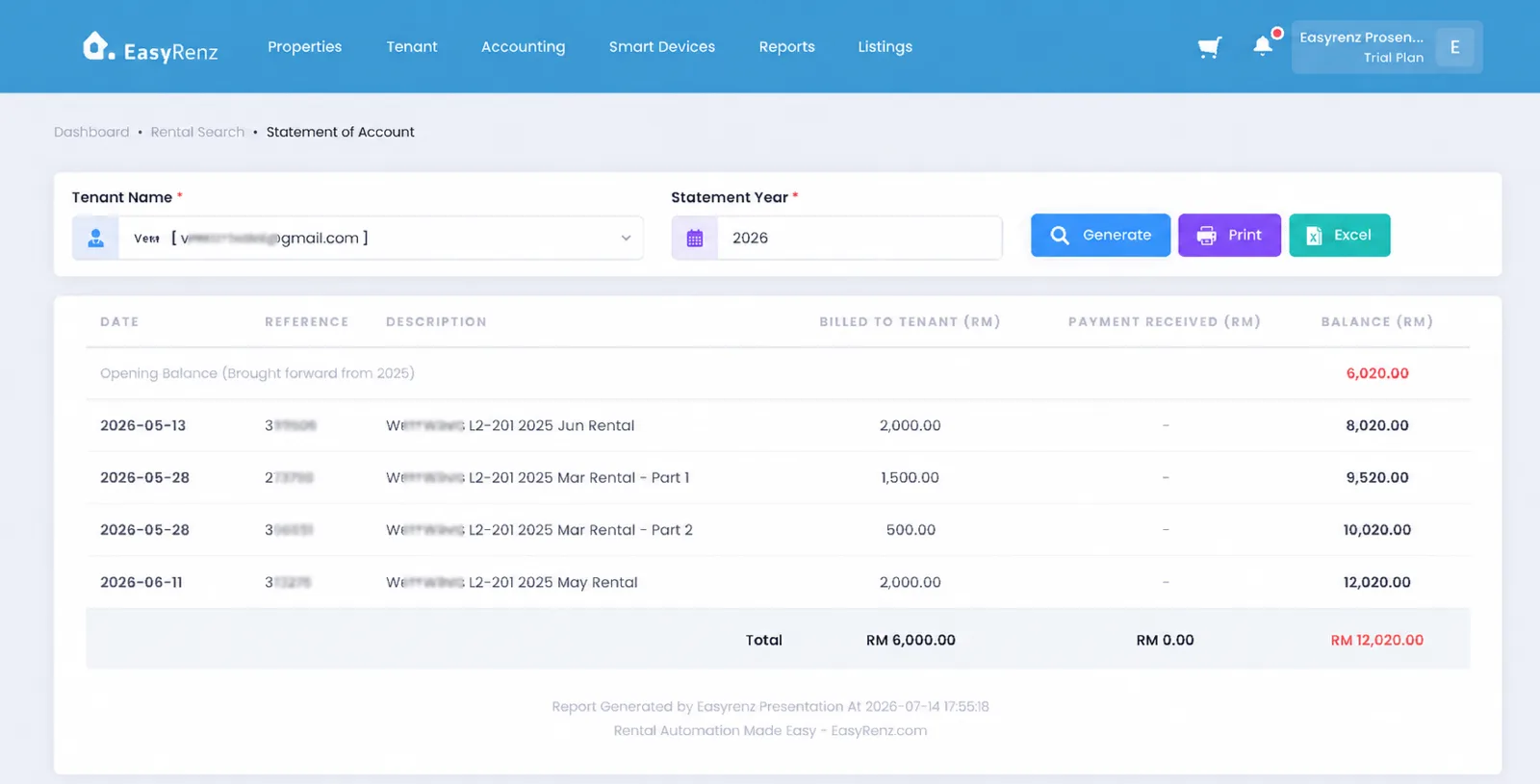
Collection rate is the clearest single measure of a rental operation. Occupancy tells you the units are let. Collection rate tells you the rent actually arrived — and the gap between those two is where most rental businesses quietly lose money.
What Collection Rate Measures
The basic calculation is straightforward:
Collection Rate = (Rent Collected ÷ Rent Due) × 100
Measured over a defined period, usually a month. Rent due is what was contractually payable, not what you expected to receive.
Two refinements make it more useful:
- On-time collection rate counts only payments received by the due date. This is the number that predicts problems, because a tenant who pays late every month is a tenant who will eventually not pay at all.
- Rolling collection rate measures over three months rather than one, smoothing the distortion from a single tenant paying two months at once.
A portfolio can show 97% collection and 60% on-time collection. Those describe very different operations.
Why Payments Slip
Late payment usually has a cause, and the causes need different responses:
- Friction. The tenant intends to pay but the process is awkward — an account number they have to look up, a transfer limit, a bank app they rarely use.
- Timing mismatch. Rent falls due on the first; the tenant is paid on the fifth. Entirely predictable and entirely fixable.
- Forgetfulness. No reminder, no standing instruction, no consequence for being a week late.
- Genuine hardship. Income interrupted. Needs a plan, not pressure.
- Deliberate non-payment. The smallest category, and the only one that needs formal process.
Most landlords treat all five as the last one. The result is friction with tenants who would have paid anyway, and slow escalation against the few who will not.
Remove The Friction First
This is the cheapest intervention and usually the most effective. Every additional step between a tenant's intention to pay and the money arriving is an opportunity for it not to.
- Give the same payment details every month, in the same place
- Provide a reference that identifies the tenant and the period automatically
- Support the payment method your tenants actually use
- Make the amount unambiguous, including any charges
Where a portal or payment link generates the reference and the amount, reconciliation stops being a matching exercise. That saves your time and removes the most common cause of a payment being credited to the wrong tenancy.
Move The Due Date
If a tenant is consistently five days late and is consistently paid on the fifth, the problem is the due date, not the tenant.
Aligning rent due dates with tenants' pay cycles at the point of signing costs nothing and eliminates an entire category of lateness. It is the single most underused lever in rental collection, largely because the first of the month feels like a rule rather than a choice.
Remind Before, Not After
A reminder sent three days before the due date prevents more late payments than any number of reminders sent afterwards. The first is helpful; the second is a chase.
A sequence that works:
- Three days before: a short notice of the amount and date
- On the due date: nothing, unless the payment has not arrived by end of day
- Two days after: a neutral reminder stating the amount outstanding
- Seven days after: direct contact from a person
The whole sequence should be automatic. A reminder that depends on someone remembering to send it is not a system, and it will be applied inconsistently — which is both less effective and harder to defend if a tenancy ends in dispute.
Make The Consequence Real And Predictable
A late payment charge written into the agreement and never applied teaches tenants that the due date is advisory. Applied inconsistently, it teaches them that enforcement depends on your mood.
Applied automatically and identically to everyone, it becomes a fact of the tenancy rather than a personal conflict. The charge does not need to be punitive — it needs to be certain. Certainty is what changes behaviour.
Reconcile Weekly, Not Monthly
The interval at which you check the position determines the size of the problem you find.
Reconcile monthly and a missed payment surfaces at up to thirty days, by which time a second month is nearly due and the tenant owes an amount they cannot clear from one pay cycle. Reconcile weekly and the same tenant is contacted while they owe one month, which most people can recover from.
This is the mechanism behind almost every large arrears balance: not a tenant who refused to pay, but a small shortfall that was not noticed until it had become unpayable.
Screen For It At The Start
Collection rate is substantially determined before a tenant moves in. The checks that matter:
- Verified, documented income at a sensible multiple of the rent
- Employment confirmed with the employer, not just stated
- A reference from the previous landlord, asked specifically about payment history
- Identity verified against documents
A vacant unit creates pressure to skip this. That pressure is exactly when it matters most — one month of unpaid rent costs more than several weeks of additional vacancy, and a bad tenancy can run for many months.
Track It Per Property, Not Just Overall
A portfolio-level collection rate hides more than it shows. Broken down by property, building or tenant segment, patterns appear:
- One building consistently below the rest — usually a management or condition problem
- A tenant type with systematically later payment — usually a due-date or pay-cycle mismatch
- Seasonal dips around festive periods — predictable, and worth communicating about in advance
Once you can see which part of the portfolio is dragging the number, the intervention becomes specific instead of general. Chasing everyone harder is the response of an operation that cannot tell where the problem is.
A Reasonable Target
A well-run residential operation should collect substantially all rent due within the month, with on-time collection well above ninety per cent. The absolute figure matters less than the direction and the consistency.
Improvement almost always comes from the same order of operations: remove friction, align due dates, automate reminders, apply consequences consistently, reconcile weekly, and screen properly at the start. Enforcement is the last resort, not the strategy.
Ready To Simplify Property Management?
Manage properties, collect rent and track maintenance from one platform built for landlords, property managers and rental operators.